How we work
A method, not a course catalogue.
Every engagement follows the same four steps and produces the same three things: a plan built around your work, capability your teams can use on Monday, and an agreed way of judging whether it worked.
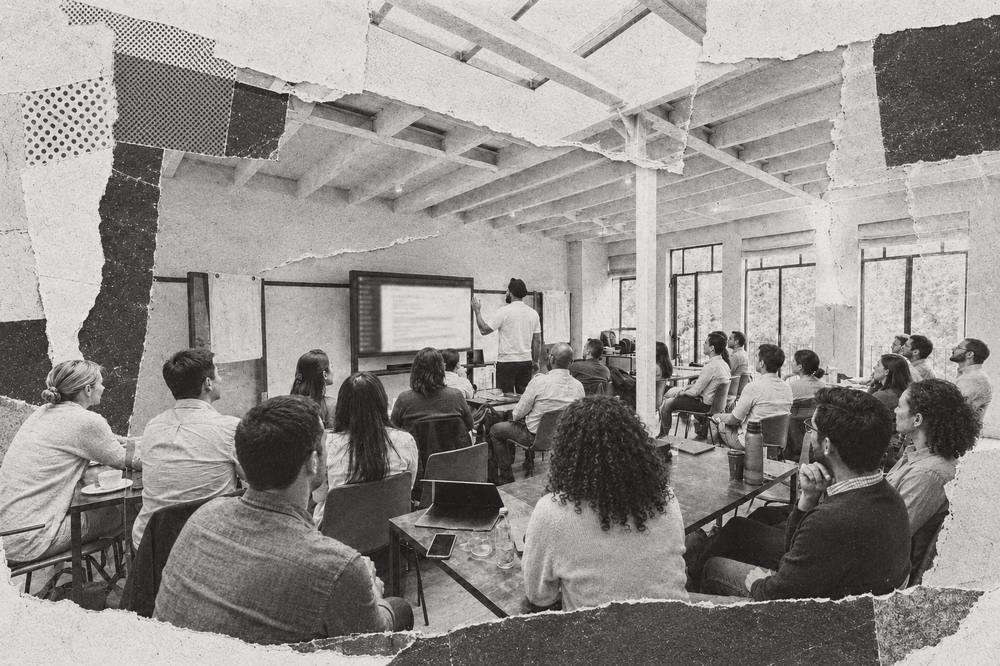
The four steps
The intentional
method.
A clear route from tool access to practical capability, built around the organisation rather than a generic course.
-
01
Discover
We assess your people, workflows, approved tools and current level of AI maturity.
- Short interviews and a skills baseline across the group, so we know the real starting point rather than the assumed one
- A review of the tasks and workflows that consume the most time, and where quality is inconsistent
- A check of your approved tools, licences, policies and data constraints before anything is designed
-
02
Design
We build learning around the roles, use cases and constraints that matter to your organisation.
- Use cases selected on value and feasibility, then sequenced so early wins build confidence
- Exercises written from your own documents, meetings and processes rather than generic samples
- Success criteria drafted with the sponsor and signed off alongside the session plan
-
03
Deliver
Your teams apply AI to recognisable work - not abstract exercises or generic prompt lists.
- Hands-on sessions in your own environment, working on live tasks people brought with them
- Prompting, context and verification taught through the work, including where the output should be rejected
- Each participant leaves with reusable prompts and a workflow they have already run once
-
04
Embed
We reinforce new practices, then review honestly against what we agreed at the start.
- A 30-day review with the sponsor against the success criteria, while what has stalled is still cheap to fix
- Support for internal champions, shared prompt libraries and team-level working standards
- A clear recommendation on the next function, capability or phase worth investing in
What the engagement looks like
Roughly two weeks
from first call.
Scoping is deliberately light. The work that makes a session land is the workflow review, not a long procurement cycle.
- Step 01
Scoping call
45 minutes. Who the audience is, what tools are in place, what you want to be different afterwards.
- Step 02
Workflow review
A short look at real tasks with a sample of participants, plus a check on tools, licences and policy.
- Step 03
Plan and criteria
A tailored session plan and the success criteria, both signed off by you before anything is booked.
- Step 04
Delivery
On-site or virtual, in your own environment, working on your own material.
- Step 05
30-day review
A short review with the sponsor against the criteria, and an honest read on what to do next.
Multi-team rollouts phase the same five steps by function or site, with leadership involved early.
Both sides of the engagement
What you receive.
What we need from you.
What you receive
Everything below is a named deliverable, not a by-product of attending.
- A tailored session planBuilt from your workflows and signed off before delivery, so there are no surprises on the day.
- Exercises from your own workYour documents, processes and decisions - not sample data from another industry.
- A role-specific referenceEach participant keeps a short guide to the workflows covered, written for their role rather than the tool.
- Reusable prompts and patternsThe approaches that worked in the room, captured so they can be shared across the team.
- A success criteria checklistObservable signals the sponsor can check against, agreed with you during scoping.
- A 30-day reviewA short, honest read on what stuck, what stalled and where to go next.
What we need from you
Short list, but it is the difference between training that lands and training that is merely attended.
- A sponsor who owns the outcomeSomeone who agrees the success criteria and will look at them again at 30 days.
- Access to a few participants beforehandHalf an hour each with three or four people is enough to ground the whole programme.
- Permission to use real materialRedacted where it needs to be, but real. Generic exercises are why most AI training fails to transfer.
- Working tools on the dayLicences assigned, access confirmed, people able to sign in before the session starts.
- Protected timePeople in the room, not half in the room. A session competing with a live inbox teaches nothing.
- Your policies up frontAcceptable use and data rules, so we teach practices your organisation actually permits.
How you will know it worked
Judging the training should not depend on how the session felt.
Most training is measured by a feedback form filled in while people are still in the room. That tells you whether the day was enjoyable. It tells you nothing about whether anything changed.
So we agree the success criteria with you during scoping, sign them off alongside the session plan, and hand them over on the day. Every item is something a manager can observe in the normal course of work - no surveys, no test scores, no self-assessment.
You end up holding the instrument for judging us. That is deliberate.
Sixteen observable signals
- Behaviour - is AI being used unprompted, on real work, by more than one person?
- Judgement - is bad output being rejected, and is anyone saying when AI is the wrong tool?
- Language - have the questions in meetings changed, and is anyone teaching anyone else?
- Workflow - has a named process actually changed, and did it survive a busy week?
Four groups, four signals each. A signal that is not yet visible is information, not failure - adoption blocked by licences or workload is not a training problem, and naming it early is more useful than recording a low score.
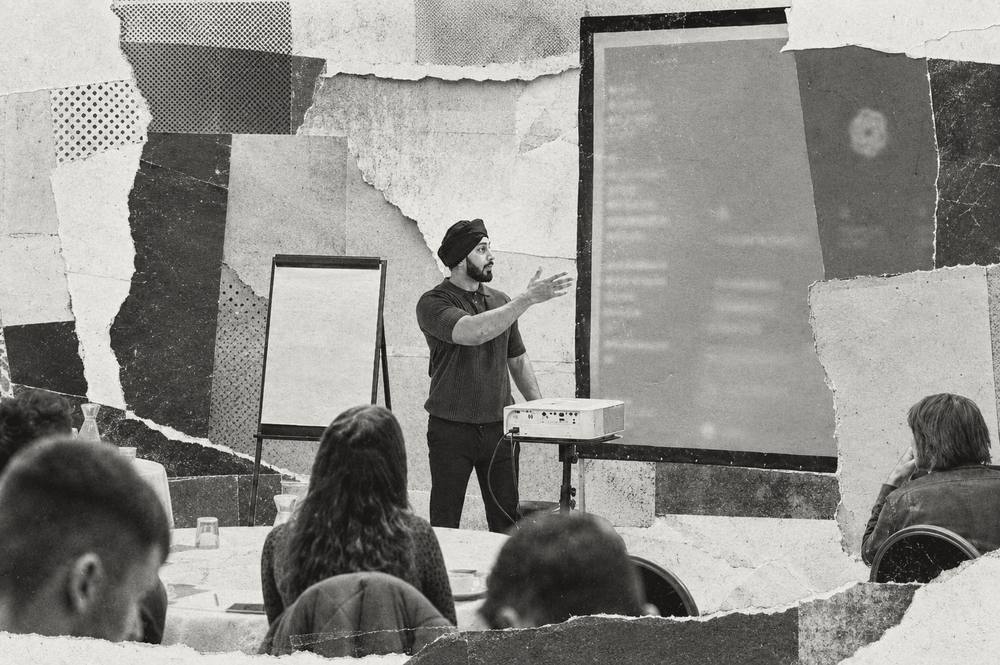
What changes afterwards
Training that has
to show its work.
Attendance is not the outcome. These are the four questions the success criteria are built from.
-
01
Confidence
Do people understand how to use AI safely and appropriately?
- Do they know which tool to reach for?
- Do they know what data is acceptable to use?
- Do they know when not to use AI at all?
-
02
Capability
Can they complete relevant tasks with sound judgement?
- Do they understand how prompting and context work?
- Can they steer a model towards a usable output?
- Can they check and correct what it produces?
-
03
Behaviour
Are the new practices still being used after the session?
- Has AI been built into how the work is actually done?
- Are they exercising good AI hygiene without prompting?
- Are they sharing what works with the rest of the team?
-
04
Value
Has the workflow improved in time, quality or effectiveness?
- Do they know where AI helps and where human judgement must lead?
- Do they understand where token and tool usage is worth the cost?
- Can the improvement be pointed to, not just felt?
Platforms we support
Training for the tools
you have invested in.
 Microsoft 365 Copilot
 ChatGPT
 Claude
Using something else? Get in touch and we will confirm whether we can support it.
Product names and logos are trademarks of their respective owners, shown here for identification only.
The platform is not the programme. It is the environment in which people learn to do better work.
Before you enquire
FAQs
How long does a programme take to set up?
Typically around two weeks from first conversation to delivery: a scoping call, a short review of the workflows involved, then a tailored session plan for your sign-off.
Do you train on the tools we already have?
Yes - sessions run in your approved environment, using your own policies and permitted data. If there are other tools you are considering, that is a useful conversation to have as part of the leadership session, where we look at optimisation and where the real value sits.
Can you deliver remotely?
Yes. Programmes run on-site or over Teams, Zoom or Google Meet in the same format. Multi-site organisations usually mix both.
How do you handle data and confidentiality?
Exercises use your real workflows, but not sensitive records unless your policy allows it. We work to your acceptable-use and data-protection rules, and can sign an NDA before scoping.
What happens after the session?
Participants leave with a role-specific reference for their own workflows, and the sponsor holds the success criteria. We review against those at 30 days to see what is still in use, what has stalled and where to go next.
Do participants need any prior AI experience?
No. We assess the starting point during scoping and pitch the session accordingly, including groups where confidence and scepticism vary widely. Mixed-ability rooms are normal and usually productive.
Start with the work
Get in touch
Whether your teams are struggling to get started or ready to work in a more optimised way, the first conversation is about your people, tools and priorities.
Prefer email? hello@intentionalai.co.uk
We reply within two working days.